
Ghosts
From Acadiana’s epoch of Evangeline to the myriad tales of haunted habitats in New Orleans’ French Quarter, South Louisiana has a rich heritage — and active interest — in the plausibility of wandering souls from beyond the grave.
In these parts, ghost stories abound, mostly the sort told around campfires to adolescent audiences for pure entertainment. But actual sightings by reasonable, mature adults evoke a different reaction.
Houmas House Plantation and Gardens is the site of two very serious, inexplicable events: one precipitated by nature, the other by the very unnatural.
The Legend of The Gentlemen
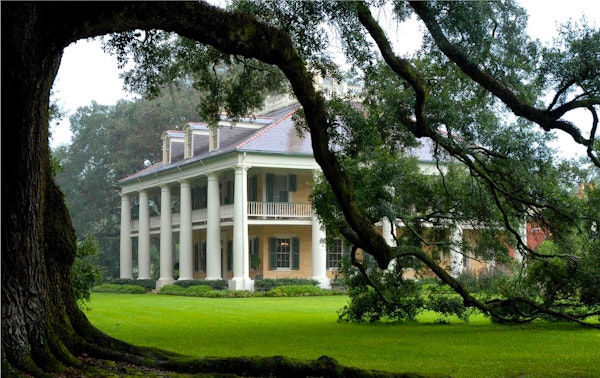 In the days before the levee, Houmas House’s Oak alley ran across the grand lawn, through the batture, and on to the river’s edge. The perfectly formed and heroically erect trees spread their branches arm-in-arm to welcome visitors to the property, all of whom approached from the River Road.
John Burnside, a colorful bachelor who presided as owner during the late 1800s, lovingly referred to these giant, leafy sentinels as “The Gentlemen.” The reference prevailed through generations of stewardship until progress, in the form of flood control, came to the Great River Road.
The legend and the irony begins with the Great Flood of 1927 when the area around Houmas House was inundated for weeks and weeks. Houmas House, located on high ground, was spared — an island in a sea of misery and suffering that wreaked havoc on lives, property, and the economy all along the big river.
On the heels of the great flood came the Great Depression, which spawned the Works Progress Administration (WPA). Among the projects that created work and wages for the Great Depression’s hordes of indigents was the construction of new and higher levees.
As progress marched down the river, it also marched up the bank toward the once-great homes along the River Road, including Houmas House, which was by then unoccupied and out of the sugar business.
Only Mr. Green, the caretaker, and his wife lived on the property, making their home in the same house near the east gate, that is now used as our Bridal Cottage.
Despite the national economic depression and decline in plantation life, “The Gentlemen” stood even b than the day Burnside named the 24 stately trees nearly 100 years earlier.
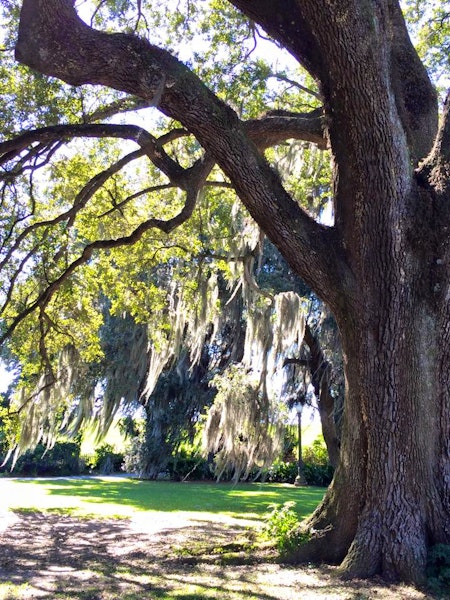 But as the levee construction crews approached, their big saws brought Gentleman after Gentleman crashing to the ground. Up from the river toward the great house marched progress. The levee was raised, and the road was widened and paved.
The work was hard and dangerous, and 16 men died out on the big bend in the river that sweeps across the front of the Houmas House property. All perished after concocting a scheme to profit by floating the carcasses of Houmas House’s giant oaks downriver to be milled in New Orleans. There were 16 profiteers set off aboard the backs of the big tree trunks. Their bodies were never recovered.
It was less than a week after the work crew felled its last victim at Houmas House that Mrs. Green returned from a daybreak trip to the outhouse, wrought with fear and animated by wide-eyed hysterics as she shook her dazed husband from their bed.
As the couple wobbled onto the front porch of the caretaker’s cabin, neither could believe their eyes.
Literally overnight, the 8 remaining “Gentlemen,” which had maintained their stately symmetry through hurricanes, droughts, floods and seasons of sub-tropical pestilence, had reshaped themselves into grotesque sculptures of grief and agony, heads bowed and limbs drooping like mourners at a funeral.
The engineers assigned to the project cited a change in the water table, trauma from heavy equipment and trucks and other construction factors for the overnight transformation.
But the Greens, many long-time local residents, and members of the Houmas Tribe, original owners of the property, insist that the healthy remainder of the corps of “Gentlemen” became disfigured that cool fall night when they were occupied by wandering spirits of the lost workmen who desecrated their fallen brothers.
The impressive ancient oaks that you will encounter on the property today are the hardiest of that original cadre of Gentlemen which stretched up from the river’s edge to Houmas House and on the Houmas Indian village to the north.
The old timers in the Parish insist that they are still inhabited by the spirits.
La Petite Fille (The Little Girl)
When Kevin Kelly purchased Houmas House Plantation and Gardens at auction in the late spring of 2003, the house had been off the trail of River Road tourism for a couple of years and a relatively quiet participant in the tourism trade for even longer.
The Crown Jewel of Louisiana’s River Road had lost its luster many, many years ago: still grand in scale but quiet in a sort of slumber.
 When Kelly began his transformation of the property in the summer that year, no part of the once-grand mansion was left untouched. Fair damsel from an antebellum heyday, Houmas House was stripped of her shabby gown, scrubbed, scraped, manicured, trussed, and bustled for a new couture and her next generation of admirers.
It was an extreme makeover.
And to say the least, it was disruptive. Literally no stone on the property was left unturned, and in the process, some say, a spirit was awakened.
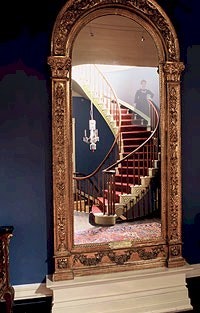
A worker from the electrician’s crew was the first to report that he had seen a young girl descending the freestanding stairway, and later in the large central hall. His concern expressed to co-workers: the house was a construction zone and unsafe for children, especially a girl of 7-10 years.
Working into the evening hours, two others in the crew saw the little girl in the blue dress with dark eyes and brunette hair. But before they could confront her, she was gone.
A cursory check of the legion of workers who came and went each day produced no identity for the little girl or any claim to her. As work wound to a conclusion, no other sightings occurred. In the brief interim between the completion of reconstruction and work on the grounds to prepare the property for the arrival of tourists, the house was quiet again for a few weeks.
In the excitement of bringing the house back on line to the public, the mystery of the little girl was set aside, out of mind for those at the house every day welcoming visitors, guiding guests and maintaining the house and gardens.
Restored to its Crown Jewel status, Houmas House is again filled with activity. Days are busy as visitors fill its galleries, halls, and parlors to experience the splendor of antebellum plantation life.
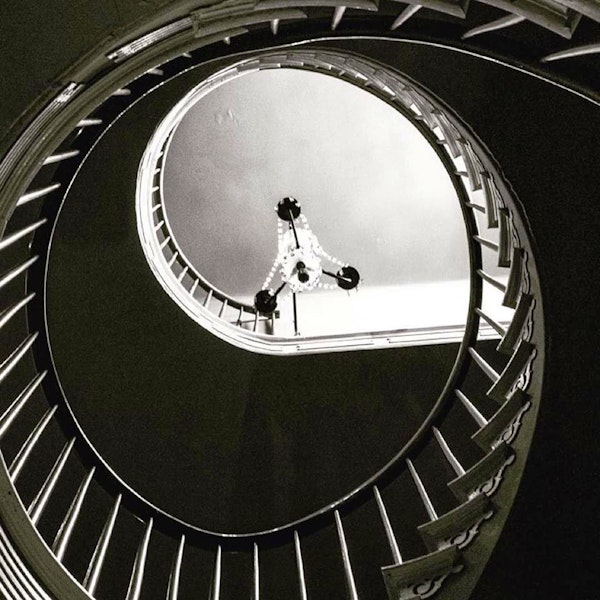 Amid the hustle and bustle, there’s another visitor in the hallway, and on the stairs, according to tour guides and guests who have seen the little girl…in the blue dress…with the dark eyes and brown hair. She is usually sighted in the morning or later in the afternoon. She seems curious about all the activity, all the people, but disappears when approached.
There is evidence in the history of the house to suggest her identity.
In 1848, the young daughter of Col. John Preston was the belle of Houmas House, loved by all who worked and visited there for her sunny personality and joi d’vivre. Her lively games of tag in the gardens or hide-and-seek in the great house filled the plantation with the happy giggles and delightful squeals of youth. Then suddenly that year she fell gravely ill. The family left for Columbia, South Carolina where the young girl soon died. The family never returned to Houmas House, and those back in Louisiana who knew her and her love of the plantation mourned their loss.
Around 1900, another daughter of Houmas House died, this time on the plantation. Col. William Porcher Miles and his wife, Harriet, lost their daughter to illness at age 7. She was laid to rest in the family cemetery, known for its ornate Gothic fence located down by the river.
The cemetery disappeared, and several of the gravesites were disturbed, when the levee was built after the 1927 flood. The graveyard would today be located under the levee and out onto the batture. The remains of the dead are long gone, but what of the spirits?
Today, a little girl is a presence witnessed by many people at Houmas House. Her true identity remains a mystery. If you encounter her in the hallway or on the stairs, try to ask her name.